When it comes to international trade and transportation, one of the main concerns for business owners is ensuring that goods are moved smoothly from the moment they are handed over at the origin to the time they reach the final delivery address, with minimal hassle and coordination. But what is Door-to-Door shipping, and why do so many importers choose this method?
Door-to-Door shipping refers to a transportation service in which the logistics company takes responsibility for moving the goods from the seller’s or sender’s location in the country of origin and, after completing the necessary procedures such as domestic transportation, international shipping, customs formalities, and customs clearance, delivers the goods to the specified address at the destination.
As a result, instead of coordinating with multiple companies and separately following up on each stage of the transportation process, importers can entrust a large part of the shipping process to a specialized logistics provider.
In this article, we will explain exactly how Door-to-Door shipping works, its advantages and limitations, how its costs are calculated, and which types of goods and routes it is best suited for.
Door-to-Door shipping is one of the services offered by Balam Bar Baran to simplify the international transportation process for its customers. Based on the type of goods, origin, destination, and shipment requirements, the Balam Bar Baran team evaluates the most suitable transportation route and method and manages the transportation process through to final delivery.
Therefore, if you are looking for a simpler and more organized way to transport your goods, you can consult with Balam Bar Baran to evaluate the Door-to-Door shipping options available for your shipment.
What Is Door-to-Door Shipping?
Door-to-Door shipping is a transportation model in which the movement of goods from the designated delivery point in the country of origin to the final delivery location in the destination country is managed as an integrated process.
In this method, transportation is not limited to the international shipping segment. Depending on the agreed services, the transportation chain may include:
- Collection of the shipment from the seller
- Domestic transportation in the country of origin
- International transportation
- Arrival of the goods in the destination country
- Customs procedures and customs clearance
- Domestic transportation to the recipient’s address
For example, suppose you have purchased goods from a supplier in China and want them delivered to your warehouse in Iran. With a Door-to-Door service, the logistics company can coordinate the different stages of the journey, collect the goods from the seller, arrange the required transportation, and finally deliver the shipment to its destination.
The main difference between Door-to-Door shipping and services such as Port-to-Port shipping is the starting and ending points of the transportation responsibility.
In Port-to-Port shipping, the transportation commitment is generally defined from one port to another. In Door-to-Door shipping, however, the scope of the service can extend from the seller’s location all the way to the final delivery address.
However, the exact services included—such as customs clearance, insurance, warehousing, or final delivery—depend on the agreement between the cargo owner and the transportation company.
How Does Door-to-Door Shipping Work?
The Door-to-Door shipping process begins once the shipment details, collection location in the country of origin, and exact delivery address at the destination have been determined.
First, the transportation company reviews information such as the type and quantity of goods, weight and volume, shipment value, packaging, and transportation requirements in order to determine the most suitable route and transportation method.
The goods are then collected from the seller’s location or the sender’s warehouse. If necessary, they may be transferred to a warehouse or consolidation center to prepare them for international transportation.
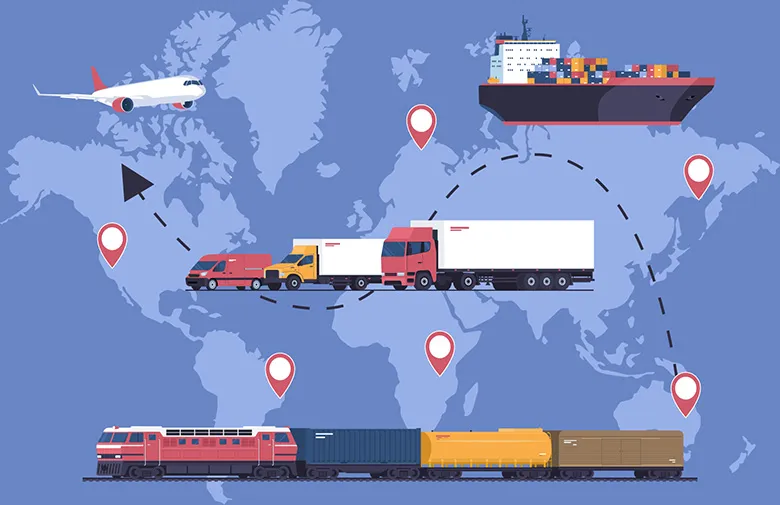
Depending on the route and shipment requirements, the goods are then transported by sea, air, road, rail, or a combination of transportation methods.
At the same time, shipment documents such as the commercial invoice, packing list, bill of lading, and other required documentation are reviewed and prepared for the next stages.
Once the goods arrive in the destination country, the shipment enters the customs process. If customs clearance is included in the Door-to-Door agreement, procedures such as customs declaration, document review, payment of applicable charges, and customs clearance can also be handled by the service provider.
After customs clearance, the goods are prepared for the final leg of the journey and transported from the customs facility, port, airport, or destination warehouse to the final delivery address.
Finally, the shipment is delivered to the location specified by the cargo owner.
Throughout the entire process, coordination between domestic transportation at the origin, international shipping, customs, and domestic transportation at the destination is extremely important. A delay or issue at any stage can increase the overall transportation time and cost.
For this reason, before starting a Door-to-Door shipment, it is important to clearly determine which services are included in the agreement, which costs are covered by the quoted rate, and who is responsible for each stage.
Types of Door-to-Door Shipping
Door-to-Door shipping can be categorized into several main types based on the transportation method. The appropriate option depends on factors such as shipment weight and volume, required delivery speed, budget, type of goods, and transportation route.
Sea Freight Door-to-Door
This method is an economical option for large, heavy shipments that are not subject to strict time constraints.
The goods are collected from the seller, transported to the port after the necessary procedures, and then shipped by sea for the main international leg of the journey.
After arrival at the destination port and completion of customs procedures, the shipment is transported to the final delivery address.
For imported goods from countries such as China, sea freight is one of the most commonly used transportation options.
Air Freight Door-to-Door
If delivery speed is a higher priority, Air Freight Door-to-Door can be a suitable option.
In this method, the goods are collected from the sender, transported to the airport, and shipped by air after completing the necessary procedures.
After arrival at the destination, customs procedures and domestic transportation are completed before the shipment reaches the final delivery address.
Air freight is generally more expensive than sea freight and is more commonly used for lighter, higher-value, or time-sensitive shipments.
Road Freight Door-to-Door
In this method, the main transportation segment is handled by trucks or other road transportation vehicles.
Road freight can offer good speed and flexibility on routes with suitable road connections between the origin and destination.
The ability to collect goods directly from the sender’s location and deliver them to the recipient’s address is one of the key advantages of road transportation in Door-to-Door services.
Rail Freight Door-to-Door
Rail transportation can be used on certain international routes for commercial and relatively large shipments.
Typically, the goods are transported by truck from the seller’s warehouse to a rail terminal, travel the main part of the route by train, and are then transferred back to road transportation for final delivery.
Depending on the route, this method can provide a suitable balance between transportation cost and delivery time.
Multimodal Door-to-Door Shipping
A single transportation method is not always the best option.
In Multimodal Door-to-Door shipping, two or more transportation methods are combined within a single logistics chain.
For example, goods may first be transported by truck from the seller’s warehouse to a port, then shipped by sea to the destination country, and finally transported by truck to the buyer’s warehouse.
This approach allows the logistics provider to select a more efficient combination of transportation methods based on the conditions of each stage of the route.
Advantages of Door-to-Door Shipping
Door-to-Door shipping is not simply about delivering goods to the final address. It can make a significant part of the transportation process easier and more manageable for the cargo owner.
The main advantages include:
- Less involvement in transportation procedures: Instead of coordinating separately for domestic transportation, international shipping, customs, and final delivery, a large part of the process can be managed by one logistics provider.
- Better coordination between different stages: When multiple stages are managed by a single company, coordination between cargo collection, international transportation, customs, and final delivery can be more efficient.
- Time savings: Centralized management can reduce delays caused by coordinating between multiple companies and transportation stages. However, total delivery time still depends on the route, customs procedures, transportation method, and other factors.
- Better cost planning: When services and charges are clearly defined in advance, cargo owners can have a clearer understanding of the total transportation cost and plan their budget accordingly.
- Simplified shipment tracking: When tracking services are available, customers can monitor the status of their shipment throughout different stages of the transportation process.
- Fewer intermediaries and transfer points: Moving goods between multiple companies and warehouses can increase the risk of errors or cargo damage. An integrated transportation chain can reduce the number of separate handling and coordination points.
- Access to additional services: Depending on the agreement, services such as cargo insurance, warehousing, packaging, customs clearance, and domestic transportation can be provided alongside the main transportation service.
- Simplified follow-up and accountability: When multiple transportation stages are managed by one provider, tracking the shipment and addressing potential issues can be easier for the cargo owner.
- Suitable for different types of businesses: From small importers and online retailers to companies importing commercial and industrial shipments, businesses can use Door-to-Door services depending on the characteristics of their goods and route.
Disadvantages of Door-to-Door Shipping
Although Door-to-Door shipping simplifies the transportation process, choosing this method without carefully reviewing the shipment requirements and service agreement can create challenges.
The main limitations include:
- Higher costs on some routes: Since Door-to-Door services can cover multiple stages of the transportation chain, from cargo collection to final delivery, the total cost may be higher than services such as Port-to-Port shipping. However, the final price depends on the route, type of goods, and services included.
- Dependence on the logistics provider: A significant portion of the process is entrusted to the service provider. If the company has difficulties coordinating transportation, customs procedures, or final delivery, the entire process may be affected.
- Potential additional charges: If the terms of the agreement are not clearly defined, additional costs such as warehousing, demurrage, customs services, insurance, or domestic transportation may be charged separately.
- Restrictions for certain goods: Dangerous goods, perishable products, pharmaceuticals, chemicals, and shipments requiring special permits may be subject to additional transportation restrictions.
- No guarantee of an exact delivery date: Door-to-Door service does not necessarily mean that goods will be delivered on a specific date. Customs delays, transportation disruptions, port conditions, route changes, and restrictions in the origin or destination country can affect delivery time.
- Less direct control for the cargo owner: Since most transportation stages are managed by one provider, the cargo owner has less direct control over individual stages and relies more heavily on the logistics company.
- The importance of choosing a reliable company: The quality of Door-to-Door service depends heavily on the provider’s experience, transportation network, and operational capabilities. Choosing an unreliable provider can lead to delays, additional costs, or delivery problems.
Therefore, when selecting Door-to-Door shipping, do not focus solely on the quoted price. Carefully review the scope of services, potential additional costs, insurance coverage, responsibilities of each party, estimated delivery time, and customs clearance arrangements.
What Types of Goods Are Suitable for Door-to-Door Shipping?
Door-to-Door shipping can be suitable for a wide range of commercial and personal goods. However, the suitability of this method depends more on the type of shipment, transportation requirements, weight and volume, cargo value, and regulations in the origin and destination countries than simply on the product category.
For example, retail goods such as clothing, bags and footwear, household appliances, electronic equipment, and consumer products can often be transported using this method.
Door-to-Door shipping can also be a practical option for industrial parts, machinery, equipment, and factory raw materials, provided that the relevant transportation requirements are met.
Shipments that are transported directly from a supplier in the origin country to the buyer’s warehouse, office, or business location can also benefit from this service.
For lightweight and time-sensitive goods, Air Freight Door-to-Door may be more suitable, while sea freight or multimodal transportation can be a better choice for larger and heavier shipments.
However, certain goods, including dangerous materials, perishable products, pharmaceuticals, chemicals, and products requiring special permits, may be subject to additional restrictions and requirements.
Therefore, before selecting Door-to-Door shipping, it is advisable to review the exact product specifications, shipment weight and volume, cargo value, origin and destination countries, and required permits.
Door-to-Door Shipping vs. Other Transportation Methods
The main difference between various transportation models is where the goods are collected and where the transportation provider’s responsibility ends.
Door-to-Door
Goods are collected from the seller’s or sender’s specified location at the origin and delivered to the recipient’s final address at the destination.
Depending on the agreement, services such as domestic transportation, international shipping, customs clearance, warehousing, and insurance may also be included.
Port-to-Port
In this model, the main transportation responsibility typically begins at one port or terminal and ends at another.
Transportation from the seller’s location to the origin port and from the destination port to the final delivery address is generally handled separately by the cargo owner or other service providers.
Door-to-Port
Goods are collected from a specified address at the origin, but the transportation service ends at the destination port or terminal.
The cargo owner is therefore responsible for arranging the remaining transportation from the destination port to the final warehouse or delivery address.
Port-to-Door
In this model, goods are handed over to the transportation provider at the origin port or terminal and, depending on the agreed services, are transported internationally and delivered to the final address.
The transportation stage before the origin port is generally outside the scope of this service.
Difference in Transportation Responsibility
With Door-to-Door shipping, a larger part of the transportation chain is generally coordinated by one logistics provider. In models such as Port-to-Port, the cargo owner may need to manage more stages separately.
Difference in Cost
The cost of each method depends on factors such as the route, type of goods, weight and volume, and required services.
Therefore, Door-to-Door shipping is not necessarily always more expensive or cheaper. The best approach is to compare the total cost of the entire transportation process across different options.
Difference in Coordination
The broader the start and end points of the service, the more transportation coordination is handled by the logistics provider.
For this reason, Door-to-Door shipping can be particularly suitable for customers who prefer to manage their transportation process through one integrated service.
How Long Does Door-to-Door Shipping Take?
There is no fixed transit time for Door-to-Door shipping, as delivery time varies depending on factors such as the origin and destination countries, transportation method, distance, type and volume of goods, cargo preparation time, customs procedures, and route conditions.
In general, Air Freight Door-to-Door is the fastest option and can be completed within a shorter timeframe on suitable routes. Sea freight typically requires more time due to vessel schedules, ocean transit, port operations, and customs procedures.
Road and rail transportation also have varying transit times depending on the route, border crossings, and terminals involved.
In addition to the main transportation time, the following stages should also be considered:
- Collection of goods from the seller
- Transportation to the port or airport
- Document preparation
- Customs clearance
- Domestic transportation in the destination country
- Final delivery
For example, a sea shipment may take several weeks for the ocean transportation segment alone, while the total Door-to-Door transit time—from collection at the origin to delivery at the buyer’s warehouse—may be longer.
Factors such as port congestion, holidays, weather conditions, documentation issues, customs inspections, changes in transportation schedules, or route restrictions can also increase delivery times.
Therefore, for a more accurate estimated transit time, the origin, destination, type of goods, shipment weight and volume, and preferred transportation method should be evaluated.
What Should You Consider When Choosing a Door-to-Door Shipping Company?
Choosing the right Door-to-Door shipping company is extremely important because you are entrusting a significant part of your transportation process to that provider.
Before making a decision, review the company’s experience and track record on your specific route and make sure it has sufficient knowledge of your type of goods and the regulations of the origin and destination countries.
Cost transparency is also essential. Ask the logistics provider to clearly explain which services are included in the quoted rate and how costs such as customs clearance, warehousing, insurance, domestic transportation, or other potential charges are calculated.
You should also consider:
- Shipment tracking
- Cargo insurance
- Customs clearance procedures
- Estimated delivery time
- Customer support
- Responsibilities of the logistics provider at each stage
It is advisable to ensure that the responsibilities of each party are clearly defined in the agreement. This makes it easier to follow up in case of delays or other issues.
Finally, do not make your decision based solely on the lowest price. Service quality, the company’s reliability, experience, and contract transparency can have a much greater impact on your overall shipping experience and final costs.
Why Choose Balam Bar Baran for Door-to-Door Shipping?
If you are looking for a simple and organized way to transport goods from origin to destination, Balam Bar Baran can assist you in managing your Door-to-Door shipping process.
Based on the type of goods, origin, destination, shipment volume, and specific requirements, the most suitable transportation route and method can be evaluated, and the different stages of the shipment can be coordinated through to final delivery.
The goal is to eliminate the need for cargo owners to coordinate separately with multiple companies for each stage—from initial collection and international transportation to customs procedures and final delivery.
For more information about the service and transportation options, you can visit the Balam Bar Baran Door-to-Door Transportation service page and request a consultation for your shipment.
Selecting the right transportation route, reviewing costs, and clearly defining the responsibilities associated with each stage before the shipment begins can help prevent many unexpected costs and complications later in the process.
Frequently Asked Questions
What is Door-to-Door shipping?
Door-to-Door shipping is a transportation method in which goods are collected from a specified location at the origin and transported through the required stages until they are delivered to the recipient’s final address. The exact services included, such as customs clearance, insurance, and warehousing, depend on the agreement.
Does Door-to-Door shipping include customs clearance?
Not necessarily. Customs clearance is included in a Door-to-Door service only when it is specifically covered by the agreement with the logistics provider. This should be clearly confirmed before the shipment begins.
How long does Door-to-Door shipping take?
Transit time depends on the origin and destination countries, transportation method, type of goods, route, customs procedures, and other factors. Air freight is generally faster than sea freight, but the exact delivery time should be estimated based on the specific shipment.
What types of goods are suitable for Door-to-Door shipping?
This service can be used for many commercial goods, raw materials, equipment, industrial parts, clothing, electronic products, and consumer goods. Certain products, such as dangerous goods or items requiring special permits, may be subject to additional restrictions.
Is Door-to-Door shipping available from China to Iran?
Yes. Subject to route availability and applicable transportation conditions, Door-to-Door services can be arranged for various types of shipments from China to Iran. The transportation method is selected based on the type and specific requirements of the cargo.
Is Door-to-Door shipping always more expensive than other transportation methods?
Not necessarily. The price depends on the route, shipment weight and volume, transportation method, and services such as customs clearance, insurance, and domestic transportation. For an accurate comparison, the total cost of the entire transportation process should be considered.
What is the difference between Door-to-Door and Port-to-Port shipping?
With Door-to-Door shipping, the transportation process can extend from the seller’s location to the recipient’s final address. Port-to-Port shipping generally covers transportation only between two specified ports or terminals.
Can I track a Door-to-Door shipment?
If shipment tracking is provided by the logistics company, customers can monitor the status of their shipment at different stages. It is advisable to ask about the available tracking options before entering into the agreement.
What information is required to get a Door-to-Door shipping quote?
Information such as the exact origin and destination, type of goods, number of packages, weight, dimensions or volume, and, where required, the value of the shipment is generally needed to calculate the transportation cost.