Imagine that you have a valuable shipment that needs to be transported from Iran to another country, but you do not know where to start. Which vessel should you choose? Which airline? What documents are required? And what about customs procedures?
This is where a professional partner comes in: a freight forwarder.
You may have heard this term before without knowing exactly who a freight forwarder is or what role they play in the complex world of import and export. Simply put, a freight forwarder is an experienced professional who acts as your guide throughout the shipping process, managing everything from the moment your cargo is handed over until it reaches its final destination. This includes booking space on a vessel or aircraft, preparing shipping documents, coordinating customs procedures, and even arranging cargo insurance.
In fact, a freight forwarder serves as a bridge between you and the complex world of international transportation—a bridge that makes the entire process simpler, faster, and more reliable.
In this article, we will take an in-depth look at what a freight forwarder is, what responsibilities they have, and why they are essential for any business involved in international trade.
At Belm Baran, with years of experience in transportation, import, and export, we play exactly this role for our customers and strive to make international trade easier and more efficient for you. If you would like to learn more about our team and approach, you can visit our About Us page.
Now, let us take a step-by-step look at who a freight forwarder is and how they can transform your international trade operations.
What Is a Freight Forwarder?
A freight forwarder is a specialized company or professional that acts as the primary intermediary and coordinator between cargo owners and transportation companies during the shipping process.
You may think that a freight forwarder is simply a company that owns trucks or ships and physically transports your cargo. However, this is usually not the case. Freight forwarders typically do not own the means of transportation themselves. Instead, they work with an extensive network of shipping lines, airlines, trucking companies, and warehouses to find the best and most cost-effective transportation solution for their customers.
Simply put, a freight forwarder operates much like a professional travel agency, except that instead of arranging travel tickets, they plan and coordinate the journey of your cargo. This includes selecting the appropriate route and transportation method, coordinating schedules, preparing documentation, and resolving potential issues that may arise during transit.
One point that often causes confusion is the difference between a freight forwarder and a customs broker. While a customs broker primarily focuses on customs procedures and cargo clearance, a freight forwarder has a much broader role and manages the entire transportation chain from the point of origin to the final destination.
The freight forwarder’s position within the supply chain is also highly important. They act as the connecting link that enables goods to move smoothly from a factory or supplier’s warehouse to the final customer across international borders.
Without freight forwarders, many businesses would have to negotiate independently with numerous transportation companies, shipping lines, and customs authorities. This would be both time-consuming and risky.
For this reason, most businesses involved in international trade today prefer to entrust this part of their operations to an experienced freight forwarder, allowing them to focus on growing and developing their core business.
How Does a Freight Forwarder Work?
To understand how a freight forwarder works, it is helpful to imagine the process as a journey with a clear beginning and end—one in which the freight forwarder is involved at every stage.
Everything begins when you, as the cargo owner, contact a freight forwarder and provide details about your shipment, including the type of goods, weight and volume, origin and destination, and your preferred timeline.
At this point, the freight forwarder begins analyzing the available transportation options. Based on the nature of the cargo and your budget, they determine whether air freight, ocean freight, or perhaps a combination of different transportation methods would be the best choice.
Once the route and transportation method have been determined, the freight forwarder books space on a vessel, aircraft, or truck. Thanks to their extensive network and relationships with transportation providers, they can often secure competitive rates and suitable schedules.
At the same time, the freight forwarder’s team prepares and reviews the necessary documents, such as the Bill of Lading, Commercial Invoice, Packing List, and relevant permits. Even a small error in these documents can result in significant delays at customs.
Once the shipment is ready for departure, the freight forwarder coordinates loading, transportation to the port or airport, and origin customs procedures.
The process does not end once the cargo is on its way. Throughout transit, the freight forwarder continuously monitors the shipment and takes immediate action if any delays or unexpected problems occur.
When the cargo arrives in the destination country, the freight forwarder becomes involved once again—this time coordinating destination customs clearance and arranging the final delivery of the cargo to your address or your customer’s location.
The best part is that, throughout this entire process, you as the cargo owner do not need to worry about every technical and operational detail. You simply provide the necessary information and leave the rest to the freight forwarder.
This simplicity and peace of mind are among the main reasons freight forwarders have become an essential part of international trade.
Main Responsibilities of a Freight Forwarder
When we take a closer look at the responsibilities of a freight forwarder, it becomes clear that the role goes far beyond simply acting as an intermediary. Freight forwarding involves a wide range of responsibilities.
One of the first and most important responsibilities is booking cargo space. This means finding and securing space on a suitable vessel, aircraft, or truck at the best possible rate and according to the required schedule.
Preparing and carefully reviewing shipping documents is another essential part of the freight forwarder’s role. Documents such as the Bill of Lading, Commercial Invoice, and Packing List must be accurate and prepared according to international standards to prevent problems during transit.
Another key responsibility is coordinating customs procedures and cargo clearance. With knowledge of customs regulations in both origin and destination countries, freight forwarders help facilitate the movement of goods through customs and minimize unnecessary delays.
Cargo insurance is also commonly included among freight forwarding services. Since shipments may be exposed to potential damage or loss during transportation, having appropriate insurance coverage can provide valuable protection and peace of mind.
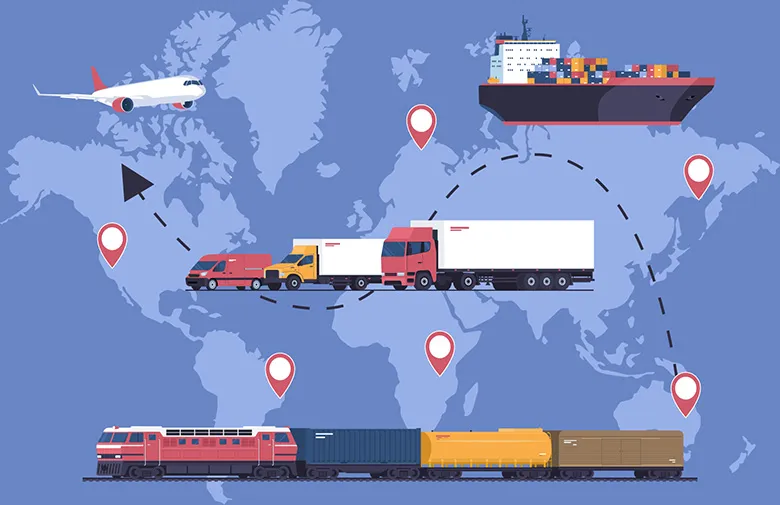
Selecting the best route and transportation method is another important responsibility. Based on the type of cargo, budget, and required delivery time, the freight forwarder recommends the most efficient combination of air, ocean, road, or rail transportation.
Shipment tracking and monitoring are also essential services. Freight forwarders continuously monitor the status of cargo until it reaches its final destination, allowing them to respond quickly if problems arise.
Finally, warehousing and cargo consolidation are other services commonly provided by freight forwarders. This is particularly useful for businesses with smaller shipments that prefer to consolidate their cargo with other shipments to reduce transportation costs.
As you can see, a freight forwarder is essentially a complete logistics support team that accompanies you from the beginning to the end of the shipping process. Handling these responsibilities independently would require significant time and effort while also increasing the risk of costly mistakes.
If you would like to learn more about the services provided by the Belm Baran team, you can visit our Services page.
Types of Freight Forwarders Based on Transportation Mode
Now that we understand the responsibilities of freight forwarders, it is useful to know that they can be categorized based on the transportation methods they specialize in. Each type has its own advantages and areas of expertise.
The first category is the air freight forwarder, which is suitable for goods that require fast delivery or are perishable, such as pharmaceutical products, sensitive electronics, or high-value goods for which delays can be costly.
Air freight is the fastest transportation method, although it is generally more expensive than other options.
The next category is the ocean freight forwarder, which is perhaps the most widely used type of freight forwarding service in international trade, especially for large-volume shipments that are not highly time-sensitive.
Ocean freight offers high capacity and relatively lower transportation costs, making it a popular choice among many importers and exporters. However, delivery times are generally longer than those of air freight.
Another category is the road freight forwarder, which is commonly used for shorter distances or shipments between neighboring countries. Road transportation offers considerable flexibility because trucks can often travel directly from the factory to the customer’s warehouse without requiring intermediate transfers.
Finally, there is the rail freight forwarder, which has become increasingly popular, particularly for long-distance land transportation. Rail freight offers a combination of relatively fast transit times and competitive costs, making it an attractive option for many trade routes, including routes between Asia and Europe.
It is worth noting that many professional freight forwarders are not limited to a single transportation method. Instead, they provide multimodal transportation services, meaning that different modes of transportation can be combined within a single shipment.
For example, part of your cargo’s journey may be completed by vessel, followed by transportation by truck to the final destination.
This flexibility allows businesses to select the most suitable combination based on their specific requirements in terms of time, cost, and cargo type, while benefiting from the advantages of multiple transportation methods.
Why Is Using a Freight Forwarder Essential? (Benefits)
Let us look at this question from another perspective. What would happen if you decided to handle the entire import or export process yourself without the assistance of a freight forwarder?
The first thing you would encounter is the unexpected complexity of the process. You would need to contact multiple shipping lines or airlines, compare prices, learn the customs regulations of the destination country from scratch, and manage all of these responsibilities while running your own business.
Naturally, this increases the likelihood of mistakes. Even a small error, such as an incorrectly completed document, could result in weeks of delays at customs.
When you work with a freight forwarder, however, you effectively have an experienced team on your side that has dealt with these challenges countless times and knows how to avoid potential problems.
Even more importantly, freight forwarders do not simply solve problems after they occur. They can often anticipate potential issues and take preventive measures before those problems arise. This is known as proactive risk management.
You should also consider the hidden costs that may arise while your cargo is in transit, such as demurrage charges or additional warehousing fees. Through careful planning and scheduling, an experienced freight forwarder can help minimize these unexpected expenses.
As your business grows and the volume of your imports or exports increases, managing every aspect of the logistics process yourself can become practically impossible.
This is where an experienced freight forwarder acts as a powerful operational partner, allowing you to focus on scaling your business without worrying about the complex details of international logistics.
In fact, successful international companies rarely manage every logistics detail themselves. Instead, they entrust these responsibilities to professionals whose core expertise lies in logistics and freight transportation.
For this reason, working with a freight forwarder should not be viewed simply as an additional expense. It should be considered a smart investment that can save significant amounts of time and financial resources in the long run.
How to Choose the Right Freight Forwarder
Now that you understand the important role a freight forwarder plays in your business, the next question is: How do you choose the right one from the many available options?
The first thing to check is the company’s licenses and official credentials. A freight forwarder that operates legally and is recognized by the relevant authorities is generally more accountable and reliable.
Next, consider the company’s experience and track record. It is better to work with companies that have years of practical experience in the industry and have handled shipments along routes similar to yours, rather than companies that simply make general claims about their capabilities.
Another important factor is the freight forwarder’s international network. The broader their relationships with shipping lines, airlines, and customs brokers in different countries, the more likely they are to find competitive rates and efficient routes.
The quality of customer support should also not be overlooked. In the real world, unexpected problems can always occur, so having a responsive team that can quickly provide solutions is extremely valuable.
Another factor that many businesses overlook is pricing transparency. A reliable freight forwarder should clearly explain all costs from the beginning and should not surprise you later with hidden or unexpected charges.
Before finalizing your cooperation with a freight forwarder, it is also a good idea to ask a few key questions. For example:
- Do you have sufficient experience with my specific trade route and origin-destination countries?
- What is your procedure for informing customers about delays or unexpected problems?
- Do you provide real-time shipment tracking?
- What exactly does the cargo insurance cover?
Clear and confident answers to these questions are usually a good indication of a professional freight forwarder.
Ultimately, choosing a freight forwarder is similar to choosing a long-term business partner rather than simply selecting a service provider. Take the time to research your options and choose a company that gives you the highest level of confidence in terms of expertise, reliability, and trust.
Throughout this article, we have tried to provide a complete and clear overview of the world of freight forwarding—from the basic definition of a freight forwarder to how they work, their main responsibilities, the different types based on transportation methods, the benefits of working with a professional freight forwarder, and finally, the key factors to consider when choosing the right one.
If we were to summarize everything in one sentence, we could say that a freight forwarder is a trusted partner who transforms the complex and challenging journey of international trade into a simpler, faster, and more seamless experience.
You no longer have to worry about booking space on vessels or aircraft. You do not need to spend hours preparing complex shipping documents or trying to understand the customs regulations of every country. An experienced freight forwarder takes these responsibilities off your shoulders.
As we have seen throughout this article, choosing the right freight forwarder can have a direct impact on the speed, cost, and overall success of your international business operations.
For this reason, we recommend taking the time to research different freight forwarders, evaluate their experience and expertise, and choose a partner you can truly trust.
If you are looking for an experienced and reliable team in transportation, import, and export, we are pleased to say that the Belm Baran team is ready to play exactly this role for you. From initial consultation and selecting the best transportation route to coordinating customs procedures and arranging final delivery, we will be by your side throughout the entire process.
If you have any questions or would like to discuss your business’s specific logistics needs, simply get in touch with our team through the Contact Us page. We will be happy to provide you with guidance as quickly as possible.
Ultimately, successful international trade is always the result of having a strong team working behind the scenes—a team that ensures everything runs smoothly so that you can focus on growing and expanding your business.
Frequently Asked Questions (FAQ)
Is a freight forwarder the same as a customs broker?
No. As mentioned earlier, a customs broker primarily focuses on customs procedures, while a freight forwarder manages the entire transportation process from the origin to the final destination.
How much do freight forwarding services cost?
There is no fixed or standard price. The cost depends on factors such as the type of goods, shipping route, shipment volume, and transportation method, including air, ocean, or road freight. Therefore, the best approach is to consult your chosen freight forwarder and request an accurate quotation.
Do we need a freight forwarder for small export shipments?
Yes. Working with a freight forwarder can be beneficial even for small shipments. Many freight forwarders offer cargo consolidation services, allowing your shipment to be combined with other cargo and potentially reducing the overall transportation cost.
What is the difference between an NVOCC and a freight forwarder?
In simple terms, an NVOCC (Non-Vessel-Operating Common Carrier) is a specific type of ocean transportation intermediary that does not own or operate vessels but issues its own ocean bills of lading and acts as a contractual carrier. A traditional freight forwarder, on the other hand, primarily acts as an intermediary and coordinator of transportation services.
Is a freight forwarder responsible for cargo damage?
This depends on the terms and conditions of your agreement with the freight forwarder and whether cargo insurance has been arranged. Therefore, it is always recommended to clarify these details with your freight forwarder before starting the cooperation.