Have you ever wondered how some businesses can import foreign goods or export Iranian products to other countries? The answer is simple: a business card (Trade License). In fact, this card acts as an official permit for international trade in Iran. Without it, you can neither be an importer nor an exporter. Many people confuse a business card with a business license ( جواز کسب), but they are completely different. A business license is for a local shop or business, while a business card is specifically for cross-border and customs activities. Whether you are a natural person (for example, a trader working alone) or a large company, you need this card for legal import or export. Don’t worry; obtaining it is not as complicated as you might think. In this article, step by step, you will learn exactly what a business card is, what types exist, what documents are required, and how you can obtain it from the Comprehensive Trade System (سامانه جامع تجارت). So stay with us until the end so that you no longer have any doubts about this process.
What is a Business Card (Trade License)?
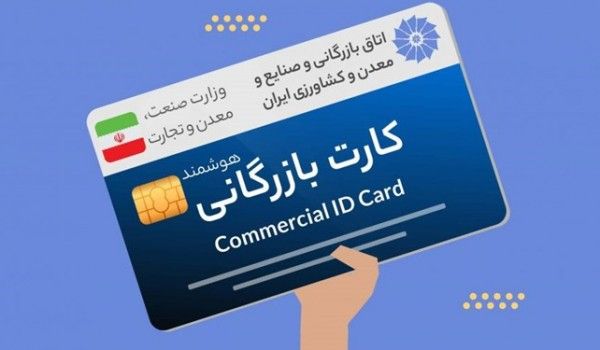
A business card is an official and legal document that allows its holder to import goods from other countries or export Iranian products abroad. You can think of it as an “international trade license.” Just as you need a driver’s license to drive a car, you need a business card to carry out imports and exports. This card is issued by the Iran Chamber of Commerce, Industries, Mines and Agriculture, and its validity is usually one year (although it is renewable). Now you might ask, “Can’t you trade without this card at all?” The answer is: if you want to clear goods through customs or register an order professionally and legally, you will get nowhere without a business card. Also, many banks require a business card to open letters of credit or LCs. The interesting point is that there are two main types of business cards: one for natural persons (i.e., a trader or economic activist working in their own name) and another for legal persons (companies, factories, and institutions). Sometimes, a temporary or one‑time use card is also issued for import or export on a specific occasion. It is important to know that a business card differs from a business license or an industrial license. A business license is for a local trade unit within the city, but a business card is designed for moving goods across the country’s borders. If you dream of international trade, this card is the first step.
Types of Business Cards
In Iran’s legal and executive system, business cards are divided into two main categories: business cards for natural persons and business cards for legal persons. The natural person card is issued for individuals who engage in international commercial activities personally and with unlimited liability. This type of card is usually suitable for small and medium‑sized traders, and obtaining it requires submitting identification documents, a certificate of no criminal record, and completing the relevant forms in the Comprehensive Trade System. In contrast, the business card for legal persons is specifically for companies, institutions, and factories. To obtain this card, it is necessary to submit the articles of association, the official gazette, and the details of the managing director and board members. Liability in this type of card is limited to the company’s assets, and the natural person who is the managing director will not have unlimited liability. In addition to these two main types, there is also a temporary or one‑time use business card, issued for traders or companies that intend to carry out only one specific transaction within a limited period. This card has no annual validity and is void after the completion of that transaction. It should also be noted that business cards are also categorized based on the type of activity (import, export, or combined), although in practice most issued cards have both import and export capabilities. Choosing the appropriate type of card depends on the volume of activity, the legal structure of the applicant, and their business plan. Awareness of these differences helps economic activists to follow the correct path for obtaining a card according to their needs.
Advantages of Having a Business Card
Having a business card brings numerous advantages for any natural or legal person who intends to engage seriously in the field of foreign trade.
The first and most important advantage is the possibility of legally importing and exporting goods. Without this card, no individual or company can register an order, clear goods through customs, or engage in international transportation.
The second advantage is access to banking facilities and opening letters of credit (LCs). Banks only allow business card holders to open Rial or foreign currency letters of credit, which is essential for professional importers.
The third advantage is the possibility of participating in international tenders and auctions. Many large public and private projects only accept companies that have a valid business card.
The fourth advantage is membership in the Iran Chamber of Commerce, Industries, Mines and Agriculture. This membership gives the trader access to the chamber’s advisory, legal, and arbitration services, as well as tariff discounts at exhibitions and trade events.
The fifth advantage is receiving a dedicated customs code, which makes the process of declaring and clearing goods faster and more transparent.
Sixth, having a business card acts as a credit document in trade negotiations with foreign partners and indicates the formality and legality of the business activity.
Seventh, a business card enables the transfer of export proceeds in the name of the person or company, which is essential for bringing currency back into the country’s economic cycle.
Eighth, business card holders can benefit from customs and tax exemptions and facilities under foreign trade development laws.
In summary, a business card is not a simple administrative formality, but a strategic tool for entering global markets and taking advantage of international trade opportunities.
Required Documents for Obtaining a Business Card
The documents required for obtaining a business card vary depending on the type of applicant (natural or legal person). Natural persons must submit a copy of their birth certificate and national ID card, a certificate of no criminal record, a high school diploma as a minimum educational qualification (in some cases), and complete the application form in the Comprehensive Trade System. Also, submitting a certificate of completion of military service or exemption for men is mandatory.
For legal persons, the documents include the articles of association and the latest amendments, the official gazette containing the notice, certified copies of the identity documents of the managing director and all board members, as well as a certificate of no criminal record for the managing director. Both groups must have a valid economic code from the tax administration. All documents must be scanned with good quality and uploaded to the Comprehensive Trade System (SAMAT).
Please note that submitting incomplete or illegible documents will halt the processing procedure and prolong the issuance time.
Steps for Obtaining a Business Card
The process of obtaining a business card in Iran is mainly carried out through the Comprehensive Trade System (SAMAT) and includes seven main steps.
First step: Initial registration in the Comprehensive Trade System at its official website and creating a personal or legal profile.
Second step: Completing identification, occupational, and economic information and uploading all required documents (including a copy of the birth certificate, national ID card, certificate of no criminal record, and company documents if applicable) into the system.
Third step: Paying the application review fee and initial membership fee through the system’s electronic payment gateway.
Fourth step: Automated inquiries from competent authorities including the Tax Administration (to confirm the economic code and absence of overdue debts), the Law Enforcement Force (for criminal record check), the Ministry of Economic Affairs and Finance, and the Organization of Registration of Deeds and Properties. These inquiries usually take between seven to fifteen working days.
Fifth step: If necessary, attending short‑term foreign trade training courses organized by the Chamber of Commerce and submitting the certificate of completion. This requirement is essential for applicants who have no background in foreign trade.
Sixth step: Final approval of the file by the secretariat of the Supervisory Commission of the Iran Chamber of Commerce. At this stage, if there is any defect or ambiguity, the system will notify the applicant, who is obliged to remedy the defect within a specified period.
Seventh and final step: Issuance of the business card in physical and electronic form. The physical card will be delivered to the applicant within a maximum of two weeks after final approval, through the provincial Chamber of Commerce or by priority post. The electronic version is also available for viewing and use in the Comprehensive Trade System profile.
It should be noted that the entire process from registration to receipt of the card under normal conditions takes between four to eight weeks, but applicants can reduce this time by submitting complete documents and continuously following up on their file status.
Cost and Time of Issuing a Business Card
The cost of obtaining a business card includes several parts: the registration and application review fee in the Comprehensive Trade System, the cost of electronic inquiries, the annual Chamber of Commerce membership fee (which is usually collected for six months or one year for the first time), and if necessary, the cost of attending trade training courses. The total amount for natural persons is usually between two to four million Tomans, and for legal persons between three to five million Tomans (varying depending on the type of company and the province of issuance).
The time required for issuing a business card under normal conditions with complete documents is about four to eight weeks. This period includes seven to fifteen days for inquiries, one to two weeks for document review and commission approval, and about one week for printing and sending the physical card. Applicants can track the status of their file online in the Comprehensive Trade System.
Key Tips for Success in Obtaining a Business Card
To increase your chances of successfully obtaining a business card, observing several tips is essential.
First: Before registering, take steps to settle any final tax debts and obtain a valid economic code, because a negative inquiry from the Tax Administration is the most important reason for file rejection.
Second: Upload all documents with appropriate quality and legibly into the Comprehensive Trade System, and ensure that the information in the documents matches the registration data.
Third: Obtain the certificate of no criminal record at most three months before registration, because its validity is limited.
Fourth: If a training course is required, register and obtain the certificate at the earliest opportunity so that the process is not halted.
Fifth: Follow up on the file status in the system every week and, if a defect is announced, take action to remedy it within a maximum of one week.
Sixth: Strictly avoid submitting forged documents or false information, as this will lead to multi‑year disqualification.
Seventh: Be careful in choosing the type of card (natural or legal) and decide according to the structure of your business.
Frequently Asked Questions (FAQ)
Question: Can I have both a natural person business card and a legal person business card at the same time?
Answer: Yes, a natural person can, as the managing director of a company, obtain the legal business card of that company and also have their own natural person card. These two cards are independent of each other.
Question: Does tax debt cause the revocation of a business card?
Answer: Yes, any final tax debt above the specified threshold, after official notification, will cause the card’s activity to be suspended and eventually revoked until full settlement.
Question: Is a business card transferable to heirs or another person?
Answer: No, a business card is non‑transferable. In the event of the death of a natural person, the heirs can apply for a new card by opening a new file and complying with the regulations.
Question: Is having a formal education degree mandatory for obtaining a card?
Answer: Yes, for natural persons, at least a high school diploma is mandatory, unless they can provide provable business experience. For legal persons, the managing director’s educational qualification is also subject to the same condition.
Question: Does a business card have international validity?
Answer: Iran’s business card is only valid inside the country for customs and banking purposes. For foreign trade, the foreign party usually accepts it as an Iranian domestic permit, but it requires official translation and sometimes an apostille.
A business card is not a formal document but an essential and strategic tool for entering the field of international trade in Iran. From definition and types to documents, steps for obtaining, cost, time, and key tips, everything presented in this article shows that the process of obtaining a card, despite its apparent complexities, is entirely achievable with knowledge and precise compliance with the rules. The most important success factors include submitting complete and legible documents, resolving negative inquiries, especially tax debts, continuously following up the file status in the Comprehensive Trade System, and choosing the type of card appropriate to the legal structure of the business. It is recommended that dear applicants, before taking any action, pave their way by carefully studying the updated regulations of the Chamber of Commerce and consulting with experienced experts. Finally, having a business card opens new doors of trade opportunities, banking facilities, and participation in international tenders, which is worth the investment of time and money for any serious economic activist.