
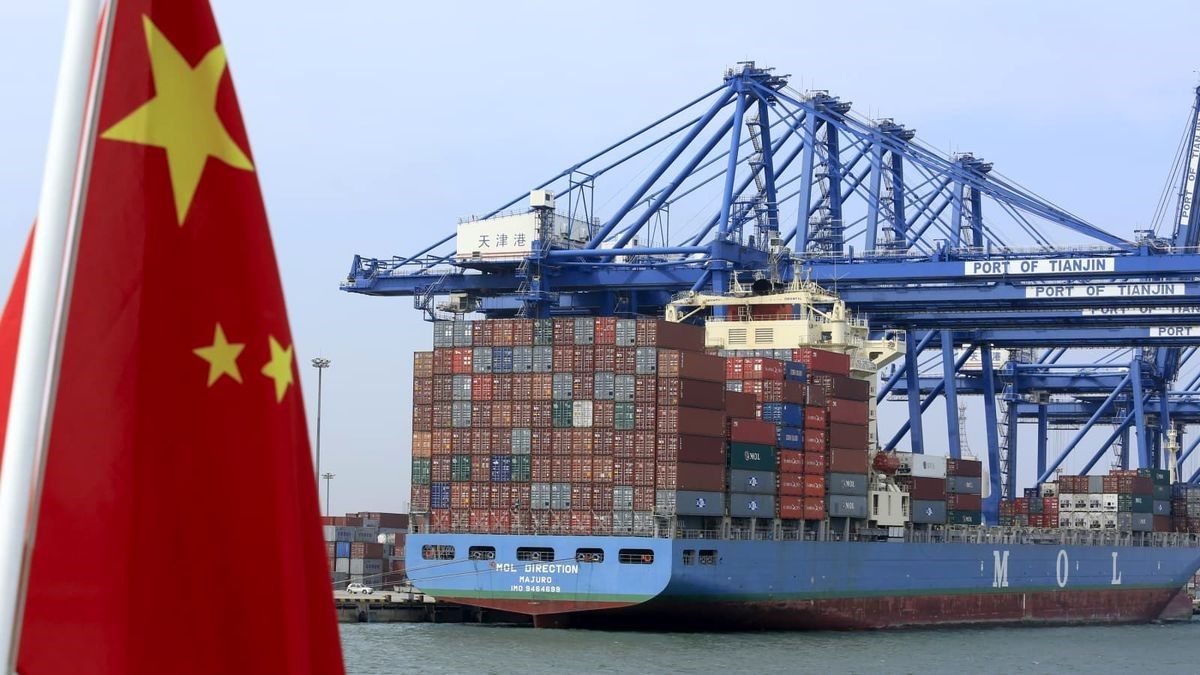
Why China Remains the Top Priority for Iranian Importers? Key Challenges and Target Audience
With the most diverse supply chain, competitive prices, and advanced logistics infrastructure, China remains the top trading partner for Iranian importers. However, beginner importers often face seven major challenges: price fluctuations and incorrect cost estimations, quality assurance without physical sampling, complexities of sea, air, and rail freight, customs procedures and clearance, currency transfer barriers under sanctions, long lead times from order to delivery, and risks of choosing an unreliable supplier. This article is specifically designed for three groups of traders: small and medium-sized merchants looking to start direct imports; e-commerce startups seeking better profit margins by eliminating intermediaries; and experienced traders wanting to optimize their processes and reduce hidden costs. In what follows, we will review step-by-step from supplier selection to door delivery with a fully practical approach.
Market Research and Selecting the Right Product
Choosing the right product is the first and most sensitive step in the import process from China. Before any action, systematic market research is essential—research that provides an accurate estimate of demand volume, profit margin, competition intensity, and tariff barriers for each product. Professional importers typically use a combination of quantitative and qualitative methods: analyzing search trends via Google Trends, reviewing similar import statistics from Iran’s Comprehensive Trade System, and studying wholesale prices on platforms like Alibaba and 1688. Additionally, three key criteria for measuring product profitability should be considered: weight-to-value ratio (the lower, the better for freight cost optimization), ease of customs clearance (number of required documents and permits), and import duty rate (which can reach up to 40% for some tariff codes). Awareness of the list of prohibited and restricted goods also prevents legal issues and cargo confiscation.
How to Find High-Profit Products from China?
To identify profitable products in imports from China, one must look beyond the initial purchase price and calculate the complete profitability equation. The starting point is analyzing the following key indicators: monthly import volume of that product into Iran (customs data), average total cost for competitors, and the gap in the target market. Products falling under the category of “high imports with low domestic production” often have good profit potential. Subsequently, explore Chinese B2B platforms such as Alibaba and Made-in-China, filtering suppliers with Gold Supplier and Trade Assurance certifications. Extracting FOB prices and MOQs (Minimum Order Quantities) from three different suppliers gives a more realistic picture of price fluctuations. It is also recommended to use trend analysis tools like Google Keyword Planner to find keywords with high search volume and low competition in the Iranian market. The final product should have three features: low weight relative to high value, no need for special customs permits, and a preferential tariff rate or tax exemption if trade agreements exist. Finally, before any bulk order, a sample order is mandatory to assess quality and compliance with Iranian standards.
Prohibited and Restricted Items in Import from China to Iran
Awareness of the list of prohibited and restricted goods is an unavoidable legal requirement for any trader. Absolute prohibited items include substances whose entry into the country is not permitted based on customs laws and national regulations—such as alcoholic beverages, all types of weapons and ammunition, narcotics and psychotropic substances, certain military and security equipment, and goods involving smuggling or copyright infringement. Importing these items not only leads to cargo seizure and heavy financial penalties but also entails criminal liability for the consignee. On the other hand, restricted goods require specific permits from competent authorities. Important examples include: medical and pharmaceutical equipment (requires Ministry of Health permit), telecommunications and wireless devices (must be cleared by the Radio Communications Regulatory Organization), automotive and motorcycle parts (standard and environmental approvals), industrial chemicals (permit from the Environmental Protection Organization), and food and cosmetic products (health authorization). It is advisable to match your product’s HS code with the latest version of Iran’s import regulations and, if necessary, consult a customs specialist before placing your order.
Finding a Reliable Supplier in China
Finding a reliable supplier in China is the foundation of success or failure in the import process. The first step is using well-known B2B platforms such as Alibaba, Made-in-China, and Global Sources. On these platforms, set search filters based on “Gold Supplier,” “Multi-Year Member,” and “Trade Assurance” criteria. These indicators significantly reduce the likelihood of dealing with fraudulent suppliers. Next, always request a video call from the warehouse and production line; any professional supplier should have no objection to physically showing the goods and packaging process. It is also recommended to request legal documents including the “Business License” (营业执照) and its official translation into English or Persian. Warning signs include insistence on 100% advance payment, mismatches between the company name and bank account, abnormally low prices compared to market averages, and refusal to provide a physical sample (even with sample and shipping fees paid). It is advisable to conduct a credit check through third-party verification systems such as commercial services affiliated with embassies or international auditing firms before signing a contract.
Price Inquiry, Sampling, and Contract
Differences Between FOB, CIF, and EXW for Iranian Importers
Choosing the right Incoterm in the purchase contract directly affects the final cost, responsibility level, and freight risks. Among these, three terms—FOB, CIF, and EXW—are most commonly used in imports from China to Iran. EXW (Ex Works) means delivery of goods at the Chinese supplier’s factory gate; in this case, all freight responsibilities from the factory gate to the final destination are borne by the Iranian buyer, who must personally arrange export clearance from China, international shipping, insurance, and Iranian customs procedures. Although this method has a lower initial cost, it carries high risk for novice importers who do not have a reliable forwarder in China. FOB (Free on Board) means the supplier delivers the goods onto the vessel at the port of origin (usually Shanghai, Ningbo, or Shenzhen), and the buyer is responsible for main freight, insurance, and destination clearance. CIF (Cost, Insurance and Freight) covers all sea freight and basic insurance costs up to the destination port (Bandar Abbas or Imam Khomeini), and the seller arranges the shipping contract. For Iranian importers, CIF is generally a safer choice, as the supplier takes responsibility for coordinating transportation and the risk of disputes in export procedures is reduced.
Sampling – Why You Must Request a Physical Sample Before Bulk Order?
Requesting a physical sample before placing a bulk order is an undeniable principle in the professional import process from China. Product images on websites or digital catalogs, no matter how attractive, can never accurately show the actual quality of raw materials, dimensional accuracy, physical durability, or packaging standards. A physical sample allows you to inspect the product up close, assess its conformity with agreed technical specifications, and decide to stop cooperation with that supplier before significant investment if defects or discrepancies exist. The cost of sampling (typically $50–200 plus express shipping via DHL or FedEx) is negligible compared to the risk of buying a defective or low-quality shipment worth tens of thousands of dollars. It is recommended to request at least three samples from three different suppliers and evaluate them comparatively. Also, before requesting samples, prepare a checklist of key quality indicators (exact weight, dimensions, material composition, color, durability) and after receiving the samples, check each item against the initial contract specifications. Keep in mind that sampling is not only for industrial goods; even for simple packaging products or accessories, this step is absolutely necessary.
Key Clauses in an International Purchase Contract
Drafting a comprehensive and precise international purchase contract is the most important legal tool for risk management in imports from China. The first and most fundamental clause is specifying the Incoterm (EXW, FOB, CIF) and the exact place of delivery. Also, stating the full identity details of both parties (registered company name, legal address, economic registration number) and matching them with bank accounts is mandatory. In the quality section, instead of general phrases like “good quality,” it is better to refer to specific international standards (e.g., ISO, ASTM, or BS). The delivery time clause should refer to an exact date or a maximum time window (e.g., “maximum 45 days from sample approval date”) and include a penalty for delay per day (typically 0.5% to 1% of shipment value). Payment terms are among the most sensitive parts; a common and safe structure is 30% advance payment as a deposit and 70% against presentation of the Bill of Lading (B/L) or a third-party inspection report (e.g., SGS). Additionally, force majeure, dispute resolution (referral to international arbitration such as ICC), and legal costs in case of litigation clauses must not be ignored. It is recommended that the contract be reviewed by an international trade lawyer or consultant before signing.
Payment Methods and Currency Transfer to China Despite Sanctions
Authorized and Semi-Authorized Money Transfer Methods
Currency transfer to China under sanctions is one of the most sensitive and challenging stages of import. Fully authorized methods primarily operate through exchange offices licensed by the Central Bank of the Islamic Republic of Iran; these exchanges have interbank relationships with Chinese counterparts (often based on Yuan or UAE Dirham) and settle the remittance within 3 to 7 working days. The commission for this method typically ranges from 2% to 5%, making it a relatively safe option for amounts between 5,000and5,000and50,000. Alongside authorized methods, some importers use semi-authorized methods such as transfers via cryptocurrencies (mainly Tether – USDT). In this method, the importer pays Rials or Dollars to an active online crypto exchange, receives Tether in return, and sends it to the Chinese supplier’s wallet. Although this route has lower fees (about 1%) and instant transfer speed, there is a risk of severe exchange rate fluctuation, potential fraud by unreliable exchanges, and account freezes by regulatory authorities. It is emphasized that for large sums, you must use the first method (an exchange licensed by the Central Bank), and prior to any transfer, a credit check of the counterparty and a written contract are mandatory.
Warning: Never Transfer Money to a Personal Bank Account in China
One of the most critical safety principles in importing from China is absolutely avoiding any payment to personal accounts (current or savings accounts of natural persons). Legitimate and reliable suppliers in China all have corporate accounts registered in the name of the same trading company or factory. A seller’s insistence on receiving money into a personal account is the strongest red flag and in most cases leads to fraud, shipment of low-quality goods, or the supplier disappearing after receiving the advance payment. Personal accounts lack any commercial insurance coverage or enforceability from platforms like Alibaba; even if you have registered your order through the Trade Assurance system, paying into a personal account completely voids this guarantee. Furthermore, legal pursuit in China for funds paid into a personal account is very difficult and nearly impossible. Before any payment, carefully check the bank account holder’s name against the company name on the invoice and contract. If any discrepancy is observed, immediately cancel the order and request quotes from another supplier.
International Transportation from China to Iran
Comparison of Sea, Air, Rail, and Multimodal Routes
Choosing the right shipping method directly impacts delivery time, final cost, and potential risks in importing from China to Iran. Sea freight is the most common option for bulky and heavy shipments; with an approximate time of 35–45 days (from Chinese port of origin to Bandar Abbas) and a cost per kilogram of 1.5to1.5to3, it is economical for low-value-per-weight goods. However, the risks of demurrage, port delays, and vulnerability to humidity are among its disadvantages. Air freight with a 5–7 day transit time and a cost of 8–15perkilogramisonlyeconomicallyjustifiableforsmall,perishable,orurgentgoods.
∗∗Rail freight∗∗
viaChina,Kazakhstan,Turkmenistan to Iran offer satransit time of about18–25daysandacostof8–15perkilogramisonlyeconomicallyjustifiableforsmall,perishable,orurgentgoods.
∗∗Rail freight∗∗
viaChina,Kazakhstan,Turkmenistan to Iran offer satransit time of about18–25daysandacostof4–7 per kilogram, serving as a mid-range option in terms of speed and price, but temporary rail route closures due to political or technical issues are one of its challenges.
Multimodal transport (sea + road or rail + road) is also used when the destination warehouse is far from the port or railway station.
Practical Steps for Booking Cargo and Receiving Bill of Lading (B/L) or Air Waybill (AWB)
The cargo booking process begins with selecting a reputable forwarder (international freight forwarding company) that has operating licenses in both China and Iran. After providing the final invoice and packing list to the forwarder, they reserve space on a vessel or aircraft. In sea freight, the document of title is the Bill of Lading (B/L) , issued in three original copies. In air freight, the Air Waybill (AWB) serves as the contract of carriage, though it is not a document of title. A critical point in checking the bill of lading is the exact match of the information on it with the documents: the consignee’s name (usually the cargo owner or customs broker), address, HS code, gross weight, and number of packages must be entered without any spelling errors or discrepancies. Bills of lading are typically issued as Original or Telex Release / Surrendered ; in Telex Release mode, there is no need for physical mailing of paper copies, and the electronic bill of lading is sufficient for clearance. Before loading, take videos or photos of the packaging and carton numbering. After vessel departure, the forwarder provides you with a copy of the bill of lading, and the original copies are sent to Iran via courier.
Cargo Insurance – Why 99% of Traders Overlook It?
Cargo insurance is one of the lowest-cost yet most neglected risk management tools in imports from China to Iran. Unofficial statistics indicate that nearly 99% of novice traders, due to the mistaken belief that “nothing will happen to my cargo” or to save on the insignificant insurance premium (typically 0.5% to 2% of cargo value plus a 10% buffer), refrain from concluding an insurance contract. They are unaware that about 3% of shipments transported by sea and road each year suffer partial or total losses—incidents such as ship sinking, fires in temporary warehouses, physical impact and damage to cartons, theft from containers at intermediate ports, and damage from humidity or temperature fluctuations. The standard “All Risks” coverage covers virtually all of these except inherent vice of the goods, delay in delivery, and willful acts of the insured. Interestingly, the insurance cost is often less than 1% of the total shipment value; for example, for 10,000worthofgoods,the premium would bearound 10,000 worth of goods , the premium would bearound 50–100. With this small cost, you can have peace of mind regarding millions of Tomans of working capital. It is recommended to obtain insurance from a reputable Iranian or international company, preferably with “warehouse-to-warehouse” coverage.
Customs Clearance in Iran
Essential Documents for Clearance
To clear goods from Iranian customs, providing a set of documents is mandatory; the absence of any one will halt the process and incur demurrage charges. The most important documents are: Original Bill of Lading (B/L) for sea freight or Air Waybill (AWB) for air freight, which serves as the document of title or carriage contract. Commercial Invoice must be signed by the supplier and specify the price, quantity, product description, and Incoterm. Packing List including gross/net weight, number of cartons, dimensions, and contents of each package. Certificate of Origin if using preferential tariffs or trade agreements. Trade Card is mandatory for commercial goods valued over €1,000 (CIF value). Order Registration in Iran’s Comprehensive Trade System for all goods requiring permits or with tariffs above the base rate. Also, if necessary, special permits from regulatory bodies (such as standard, health, telecommunications, or environmental approvals) must be obtained. It is recommended that before the vessel enters Iranian waters, you provide all documents electronically and physically to your customs broker so that the clearance process proceeds with minimal delay after declaration.
Customs Tariff Code (HS Code) – The Golden Key to Reducing Import Duties
The customs tariff code, or HS Code (Harmonized System Code), is the most important factor in determining the amount of import duties and the possibility of clearing goods. This six-digit code is internationally standardized, and Iran has customized it to eight and sometimes ten digits for greater precision. Choosing the correct HS code directly affects the tariff rate; for example, two apparently similar products may have import duties of 5% or 40%, solely due to differences in raw materials or end use. Precise wording of the goods description on the invoice and its alignment with the chosen code are essential requirements. An error in this stage can have serious consequences, including fines up to four times the duty payable, cargo seizure, and even an import ban for the consignee. To find the correct code, first determine the raw material, main function, and status (raw material, semi-finished, finished) of the product. Then search the Iranian Customs Tariff section (irm.ir) or the Export/Import Regulations Office. Also, consulting a specialist customs broker before declaring goods is the lowest-cost insurance against costly mistakes. Never choose the HS code based solely on personal estimation or the supplier’s recommendation.
How to Choose a Professional Customs Clearance Agent?
Choosing a professional customs clearance agent is one of the most sensitive decisions in the import process, directly affecting clearance speed, warehousing costs, and the risk of cargo hold. A professional clearance agent must first have an official license from Iranian Customs and provide a verifiable work history at major customs offices (especially Shahid Rajaei Customs in Bandar Abbas). Additionally, the ability to manage effective communication with regulatory bodies and accurately prepare declarations and documents (including obtaining special permits) are fundamental indicators of a skilled agent. Alongside credentials and experience, transparency in fees (clearance fee, procedural costs, potential inspection and loading charges) and providing a written contract before starting work are signs of seriousness and professionalism. In this regard, Balambar Company (بلَم بار) as one of the active players in the international transport sector has a long history in logistics and sea, land, and air freight operations. You can register your request right now for collaboration at their website.
Door Delivery and Hidden Costs
Domestic Transport from Customs to Your Warehouse
After completing customs formalities and obtaining clearance, the domestic transport stage from the customs warehouse to your final destination begins. This stage, often referred to as “direct shipment” or “internal transit,” requires careful planning for fast and safe cargo transfer. The cost of this part is mainly calculated based on distance, weight and volume of goods, type of vehicle, and transport time. Timely coordination with the transport company, selecting the appropriate fleet (including light trucks, heavy trucks, and trailers), and obtaining necessary permits for entering and exiting cities are among the essential actions in this stage. In this context, choosing a reliable logistics partner that covers a wide network of multimodal transport services is of great importance. Balambar International Transport Group (گروه حمل و نقل بینالمللی بلم بار) by providing specialized services in road, rail, and multimodal freight, offers integrated supply chain management from entry ports to customers’ warehouse doors. You can view the complete details of these comprehensive logistics services on the official website of the group at: https://balambarbaran.com/fa/services/
Frequently Asked Questions (FAQ)
1: What is the minimum capital required to start importing from China to Iran?
A: From 300 million Tomans (for lightweight products like mobile phones, electronic components via air freight) to 1 billion Tomans (for bulky products via sea freight).
Q2: Can I import without a Trade Card?
A: For commercial goods above €1,000 (CIF value), no. For personal goods or samples below €1,000, yes.
Q3: What is the best website to find a Chinese factory directly?
A: Alibaba for finished goods, 1688.com for bulk goods from the Chinese domestic market (with the help of a professional sourcing agent), and Made-in-China for industrial equipment.
Q4: How do sanctions affect payments to China?
A: Chinese banks refuse to accept US Dollars. Common solutions: Yuan exchange (via Iran-China currency exchange houses) or using Tether cryptocurrency (but with personal risk).
Q5: How long does customs clearance take?
A: Normally 3 to 7 working days. In case of physical inspection (common for high-risk goods such as chemicals, clothing, electrical equipment), 10 to 20 days.