Choosing the right warehouse for export and import goods is not simply about finding a suitable space for storing cargo; it can directly affect costs, handling speed, cargo safety, and even customer satisfaction. A standard warehouse that is appropriate for the type of goods helps ensure that shipments are stored more securely while processes such as loading, unloading, customs clearance, and dispatch are carried out more efficiently and systematically. In addition, factors such as the warehouse’s geographical location, facilities and equipment, storage conditions, security level, access to transportation routes, and warehousing costs should be carefully evaluated before making a decision. Therefore, if you are involved in import or export activities, consider warehouse selection as part of your business logistics strategy, as the right choice can reduce operational costs and risks while making cargo management much easier.
Why Is Choosing the Right Warehouse Important for Export and Import Goods?
Choosing the right warehouse for export and import goods is important because a warehouse is not merely a place to store cargo; it is an essential part of the supply chain and can affect the cost, speed, and security of the entire process. If a warehouse is selected based on the type of goods, location, capacity, equipment, storage conditions, and security requirements, the risk of damage, loss, or delays in shipment can be reduced, while inventory management becomes easier.
On the other hand, choosing a warehouse close to ports, customs facilities, transportation terminals, or major routes can reduce transportation time and costs. For imported goods, convenient access to customs facilities and the ability to manage cargo until clearance are particularly important. For export goods, timely preparation, packaging, and dispatch of shipments play an important role in preventing delays.
Therefore, when choosing a warehouse, it is better not to focus solely on rent or storage fees. Instead, consider a combination of factors such as security, facilities, accessibility, additional services, storage conditions, and the service provider’s track record. Ultimately, the right warehouse can help reduce unnecessary costs, prevent disruptions in the supply chain, and maintain cargo quality from arrival until final delivery.
What Factors Should Be Determined Before Choosing a Warehouse?
Before deciding to rent or select a warehouse, it is important to determine several key factors to ensure that the warehouse actually meets the requirements of your business and cargo. Paying attention to these factors can help prevent additional costs and potential problems later in the process:
- Type and nature of the goods: The first step is to determine exactly what type of goods will be stored. Each type of cargo has its own requirements, and there is no one-size-fits-all solution. For example, if you are importing food products such as chocolate or dairy products, temperature and humidity control are highly important. For goods such as household appliances or industrial components, however, greater attention should be paid to adequate space, shelving, and ease of handling. Therefore, before selecting a warehouse, determine the sensitivity of your goods to temperature, humidity, light, impact, and other environmental factors.
- Cargo volume and weight: You should determine how much cargo will enter the warehouse at each stage and how much storage space will be required. For example, a company may normally import 20 pallets of automotive parts per month, while during peak periods this may increase to 50 pallets. If the warehouse is designed only for normal capacity, you may face a shortage of space when inventory increases. On the other hand, renting a very large warehouse for a limited amount of cargo can create unnecessary costs. It is therefore better to consider both current requirements and potential future growth.
- Inventory turnover: Determine how quickly goods enter and leave the warehouse. If your shipments are moved frequently, quick access to cargo and suitable routes for trucks to enter and exit are highly important. For example, a distribution company that ships part of its inventory every day needs a warehouse with fast loading facilities and organized storage. Cargo that is expected to remain in storage for several months without movement may not require the same level of facilities.
- Storage duration: Determine whether the goods will remain in the warehouse for several days, weeks, or months. This has a significant impact on the type of warehouse selected and the final cost. For example, if imported goods need to remain in storage for one month due to customs clearance procedures, you should calculate not only the rent but also service and storage costs during this period. If the goods only need to be stored for a few days before being dispatched again, a warehouse with fast services and convenient access may be a better option.
- Special storage conditions: If the goods require specific environmental conditions, this should be determined from the beginning. For example, pharmaceuticals or certain food products may require controlled temperatures and cannot be stored in an ordinary warehouse. Even for non-sensitive goods, factors such as ventilation, protection against moisture, cleanliness, and protection from direct sunlight should be assessed. Before signing a contract, make sure that the warehouse facilities meet the storage requirements of your goods.
- Final destination and transportation route: The location of the warehouse can directly affect transportation time and costs. For example, if imported goods enter the country through a port and are to be transported to Tehran after customs clearance, selecting a warehouse with convenient access to major transportation routes can reduce transportation costs. For export goods, locating the warehouse near the relevant port, border terminal, or transportation center can simplify shipment coordination and dispatch.
- Warehousing budget: Do not consider only the warehouse rent or basic storage fee. Costs such as unloading and loading, internal handling, packaging, palletizing, insurance, administrative services, and even transportation to the warehouse should also be calculated. For example, Warehouse A may charge a lower monthly fee but be far from the cargo unloading point, resulting in high transportation costs. Warehouse B may be slightly more expensive but closer to the main transportation route, ultimately making it more cost-effective.
- Customs and legal requirements: For export and import goods, determine the customs status and legal requirements in advance. Some shipments may need to be stored under specific conditions until certain procedures are completed. For example, if your imported goods have not yet been cleared, you should verify whether the selected warehouse has the necessary permits and conditions to accept and store such cargo. Reviewing documents, permits, and the responsibilities of both parties before transferring the goods can help prevent future legal and financial problems.
Ultimately, the more accurate information you have about your goods and import or export process, the easier it will be to select the right warehouse. Before making a final decision, it is advisable to compare several options based on cost, location, capacity, facilities, security, and storage conditions, rather than choosing solely based on the lowest price.
What Is the Difference Between Choosing a Warehouse for Export and Import Goods?
The choice of warehouse for export and import goods largely depends on the movement of the cargo, its customs status, and the purpose of storage. Although factors such as security, capacity, storage conditions, and accessibility are important in both cases, the requirements of imported cargo are not necessarily the same as those of exported cargo. The key differences can be considered as follows:
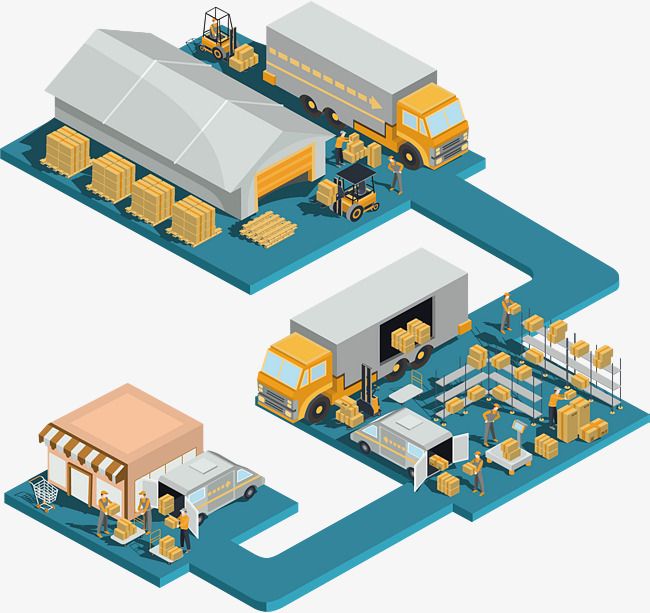
- Choosing a warehouse for export goods: In exports, the goal is generally to prepare the goods and dispatch them at the appropriate time toward a border, port, or transportation center. Therefore, the warehouse’s location is particularly important. For example, if a shipment is to be transported to another country through a port, a warehouse with convenient access to the route leading to the port can reduce transportation time and costs. Export packaging, palletizing, labeling, and preparing documents and cargo for shipment should also be considered when selecting a warehouse.
- Choosing a warehouse for import goods: Imported goods generally need to be stored after entering the country until customs clearance and distribution procedures are completed. Therefore, access to customs facilities, major transportation routes, and suitable unloading and storage facilities becomes more important. For example, if a company imports several containers of household appliances, it should select a warehouse with sufficient capacity as well as the ability to unload, count, sort, and safely store the goods.
- Differences in customs status: One of the key differences between these two types of cargo is their customs status. Imported goods may remain in storage until the customs clearance process is completed, while exports are generally more focused on preparing and dispatching goods to points of exit. Therefore, before selecting a warehouse, it is important to determine the customs status of the cargo and the legal requirements governing its storage.
- Importance of timing: For exports, coordination between the warehouse, transportation company, and shipment schedule is highly important, as delays in cargo preparation can disrupt the shipping schedule. For imports, delays in customs clearance can increase the amount of time goods remain in storage. For example, if imported cargo remains in storage for several weeks instead of a few days, storage costs will also increase.
- Required services: Exporters may require services such as export packaging, palletizing, labeling, order sorting, and loading. Importers, on the other hand, may have greater need for services such as container unloading, cargo counting, inventory control, shipment sorting, and preparation for distribution.
As a result, there is no single type of warehouse that can always be considered the best option for either export or import goods. The appropriate choice should be based on the type of goods, transportation route, customs status, storage duration, required services, and final destination of the shipment. The more carefully these factors are evaluated, the greater the likelihood of selecting a warehouse that matches your actual business requirements in terms of cost and performance.
Public, Dedicated, or Customs Warehouse: Which Option Is More Suitable?
When it comes to storing export and import goods, choosing between a public warehouse, dedicated warehouse, and customs warehouse is an important decision. None of these options is universally the best, and the appropriate choice depends on the type of goods, shipment volume, storage duration, and customs status. Let’s examine each option separately:
- Public warehouse: Suitable when you need greater flexibility: In a public warehouse, storage space is shared among multiple customers, and you generally pay only for the space you need. This can be a more economical option for businesses whose cargo volume is limited or does not remain consistently high. For example, suppose a company imports 10 to 15 pallets of mobile phone accessories each month and does not require a large dedicated space. Using a public warehouse can reduce storage costs while still providing access to services such as unloading, loading, and inventory management. However, you should make sure that the warehouse has appropriate security measures and a reliable system for separating different customers’ goods.
- Dedicated warehouse: Suitable for high volumes or sensitive goods: In a dedicated warehouse, all or a specific portion of the storage space is allocated to one company. This generally provides greater control over storage layout, access to goods, and inventory management. For example, an appliance importer that receives several containers of goods each month may require a permanent, designated space to organize products by brand, model, or destination. However, a dedicated warehouse usually costs more and is more appropriate when your cargo volume or operational requirements justify the additional expense.
Customs Warehouse: Suitable for Goods That Have Not Yet Been Cleared!
If goods are still undergoing customs procedures and need to be stored in an authorized location until the relevant formalities are completed, a customs warehouse may be a more suitable option. For example, imagine that a company has imported several containers of goods into the country, but the customs clearance process has not yet been completed. In such circumstances, using an appropriate storage facility for customs-controlled goods is particularly important. For this type of warehouse, permits, legal storage requirements, and responsibilities related to the cargo should be carefully reviewed.
Which Option Is More Cost-Effective?
There is no single answer that applies to every business. A public warehouse is generally a more flexible option for variable volumes and businesses that do not require large amounts of space. A dedicated warehouse may be economically justified when cargo volumes are high and there is a need for permanent space and greater control. A customs warehouse, meanwhile, is selected primarily based on the customs status and legal requirements of the cargo rather than simply on price.
How Do They Differ in Terms of Cargo Control?
A dedicated warehouse generally provides greater control over storage layout and management of the allocated space. In a public warehouse, goods are stored in shared or designated areas, so it is important to ensure that an accurate inventory management and segregation system is in place. In a customs warehouse, in addition to physical cargo management, requirements and restrictions related to the customs status of the goods are also important.
How Can You Choose the Most Suitable Option?
If your cargo volume is low or variable and you are looking for flexibility, a public warehouse may be a suitable option. If your cargo volume is high and you require greater control over storage space and warehousing processes, consider a dedicated warehouse. If the goods are still under customs control, first review the conditions for using a customs warehouse and the relevant legal requirements. Before making a decision, compare the cost, security, location, services, capacity, and legal conditions of each option.
What Should You Check When Visiting a Warehouse?
Before signing a contract, conducting an in-person inspection of the warehouse is one of the most important steps you can take to avoid potential costs and problems in the future. During the inspection, do not focus only on cleanliness and appearance. Carefully evaluate the following factors:
- Physical condition of the building: Inspect the floor, ceiling, and walls and look for signs of moisture, water leakage, cracks, or damage. For example, if cardboard goods or moisture-sensitive products are to be stored, dampness on the floor or walls can gradually damage the packaging and goods.
- Capacity and usable space: The stated floor area does not always represent the actual usable storage space. Check how much space remains available for cargo storage and whether there is sufficient room for employees and equipment to move around. For example, a warehouse may have an area of 1,000 square meters, while a significant portion may be occupied by offices, access routes, or equipment.
- Loading and unloading facilities: Check truck access, the height and width of entrance doors, loading docks, forklifts, and other equipment. If your shipments arrive in containers, make sure there is sufficient space for safe and efficient unloading. For example, restrictions on truck access can result in vehicle delays and increased transportation costs.
- Temperature, humidity, and ventilation conditions: For sensitive goods, temperature and humidity control systems are particularly important. If you store food products, pharmaceuticals, or certain chemicals, ask the warehouse operator about temperature ranges, ventilation systems, and how environmental conditions are monitored.
- Security systems: Check for CCTV cameras, security guards, fire detection and suppression systems, access control, and safety equipment. Also determine who is responsible for losses in the event of theft, fire, or cargo damage and whether the goods are insured.
- Cargo arrangement and management: Find out how goods are categorized and recorded and whether each shipment can be accessed quickly and easily. For example, if you have several imported shipments with different specifications, there should be a clear system for separating and identifying them to prevent the wrong goods from being dispatched.
- Accessibility and location: Assess the warehouse access route in practice, particularly if heavy trucks will regularly travel to the facility. Suitable access for transportation vehicles can help prevent delays and additional costs.
Ultimately, it is advisable to have a clear checklist when inspecting a warehouse and record the condition of each item. If you are comparing several warehouses, this information will help you make a more accurate decision rather than choosing based solely on price or appearance.
What Should You Consider When Signing a Warehousing Contract?
Once you have found a suitable warehouse, the next important step is signing the contract. A warehousing agreement should not be viewed simply as an agreement for renting storage space. In the event of damage, delays, or disputes, the contract determines the exact responsibilities of each party. Before signing, carefully review the following points:
- Detailed description of services: Clearly specify which services the warehouse operator will provide. Will the agreement cover only storage, or will it also include unloading, loading, handling, packaging, palletizing, labeling, and inventory recording? For example, if 50 pallets of imported goods are to be stored, clarify whether unloading and arranging these pallets are included in the basic fee or charged separately.
- Responsibility for damage or loss: One of the most important parts of the contract is determining responsibility for theft, fire, damage, or loss of goods. For example, if part of a shipment’s cartons are damaged due to water leakage, the contract should clearly specify who is responsible for compensating the loss.
- Cargo insurance: Determine whether the goods are insured during the storage period and what the insurance coverage limit is. Also clarify which risks are covered, as simply stating that “the goods are insured” is not sufficient.
- Costs and tariff calculation: Clearly define the amount and calculation method for all costs. Specify whether storage fees are calculated based on floor area, weight, pallet count, or storage duration, and clarify how services such as loading, unloading, handling, or packaging will be charged. This can help prevent unexpected costs.
- Contract duration and renewal conditions: Specify the contract start and end dates and the renewal procedure. If cargo volume may increase or decrease, it is advisable to include provisions for changing the required storage space.
- Termination conditions: Clearly define the circumstances under which either party can terminate the contract and whether early termination involves penalties or special conditions. This becomes particularly important if your import or export plans change.
- Cargo delivery and recording procedures: The process of delivering goods to the warehouse should be clearly defined. It is advisable to record the quantity, weight, physical condition, packaging type, and shipment specifications upon arrival. For example, if 100 cartons are delivered to the warehouse, accurately recording their quantity and condition can help prevent disputes when the goods are released.
- Access to goods and inventory reports: Specify who can access the goods and during which hours, as well as how inventory reports will be provided. Using an inbound and outbound recording system can make inventory control much easier.
Ultimately, before signing the contract, read all clauses carefully and ask questions about anything that is unclear. A clear and detailed contract not only helps prevent future disputes but also ensures that costs, responsibilities, and expectations are clearly defined from the beginning.
How Can You Choose the Most Suitable Option Among Several Warehouses?
If you are considering several warehouses, selecting the most suitable option should not be based solely on price. A warehouse may have lower storage fees but ultimately be more expensive because of its inconvenient location, weak security, or high additional costs. For a more accurate decision, establish clear criteria and compare all warehouses based on the same standards:
- Identify your key requirements: First determine your main priority: lower costs, fast access, high security, large capacity, or additional services. For example, if your goods are high-value, security may be more important than a small difference in price.
- Compare locations: Evaluate the distance from each warehouse to customs facilities, ports, terminals, factories, or the final destination. For example, if several trucks transport your goods every day, a warehouse located closer to major transportation routes may reduce transportation time and costs.
- Calculate the actual cost: Add the base storage price to unloading, loading, handling, packaging, insurance, and other service costs. Warehouse A may have lower storage fees but higher transportation and service costs, making it more expensive overall than Warehouse B.
- Evaluate quality and facilities: Compare capacity, loading equipment, forklifts, shelving, inventory management systems, temperature control, and any other facilities required for your goods. For example, if your goods require controlled temperatures, a cheaper warehouse without temperature control is not necessarily a suitable option.
- Take security and warehouse experience seriously: Check CCTV systems, security personnel, fire protection systems, insurance, and the warehouse’s history of losses or damages. Also ask how the company handles damaged or missing goods. A slightly more expensive but reliable warehouse may be more suitable over the long term.
- Compare contract terms: Review contracts based on duration, cost calculation methods, liability for damages, termination conditions, and included services. Sometimes the main difference between two warehouses is not the price but the contractual terms.
- Conduct an in-person inspection: If possible, visit all potential warehouses before making a final decision. Examine the actual storage space, truck access, cargo arrangement, and staff operations firsthand.
- Score each warehouse: To make the decision easier, define criteria such as price, location, security, capacity, equipment, and services and assign a score to each warehouse. For example, if security is particularly important to you, assign greater weight to that criterion.
Ultimately, the most suitable warehouse is not necessarily the cheapest warehouse. It is the warehouse that offers the best overall fit for your type of goods, cargo volume, transportation routes, and budget. If you are deciding between two options, compare their actual costs, service levels, and risks before making your decision.
Choosing the right warehouse for export and import goods is not simply a matter of finding storage space; it is an important part of supply chain management and reducing a business’s operational costs. As discussed throughout this article, factors such as the type and storage requirements of the goods, warehouse capacity, geographical location, access to transportation routes, loading and unloading facilities, security, insurance, customs status, and additional costs should all be carefully evaluated before making a decision.
The choice between a public, dedicated, or customs warehouse should also be based on the actual requirements of the business rather than simply on the lowest price. For example, a warehouse may initially appear cheaper, but its distance from major transportation routes or lack of required facilities may ultimately result in higher costs.
Therefore, before signing a contract, it is advisable to inspect several options in person, calculate the actual cost of each, and carefully review the contractual terms and responsibilities of both parties. Ultimately, the best warehouse is not necessarily the cheapest one; it is the warehouse whose security, accessibility, facilities, cost, and storage conditions are aligned with your actual requirements. A well-informed choice can help prevent cargo damage and delivery delays, reduce additional costs, and make the entire import and export process easier to manage and control.
If you need professional warehousing services for storing and managing your cargo, you can also explore Balam Bar Baran Warehousing Services. The company provides warehousing services with a focus on inventory management and logistics support.
Ultimately, the best warehouse is not necessarily the cheapest one; it is the warehouse whose security, accessibility, facilities, cost, and storage conditions are aligned with your actual requirements. A well-informed choice can help prevent cargo damage and delivery delays, reduce additional costs, and make the entire import and export process easier to manage and control.